
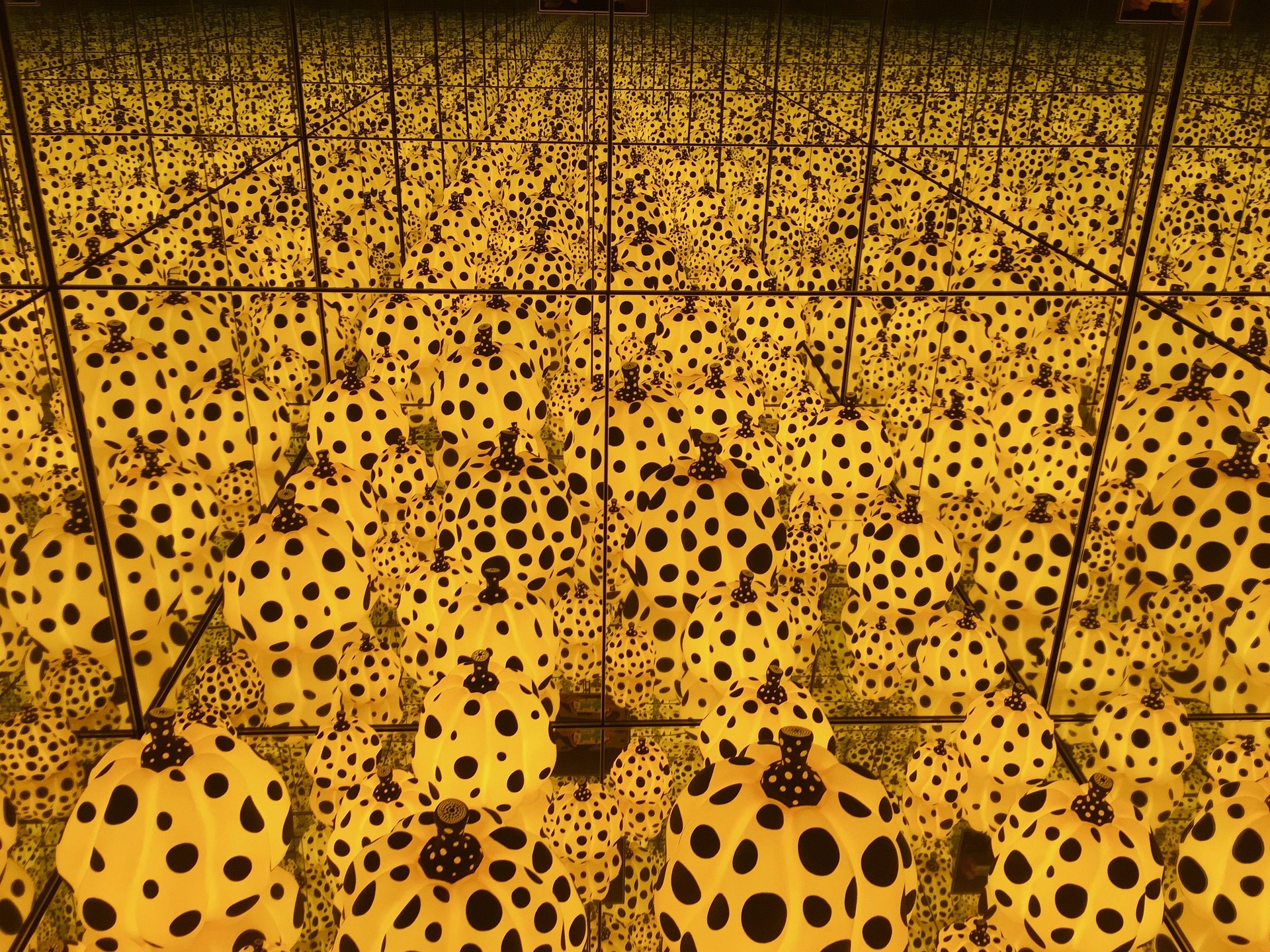
A legendary Japanese contemporary avant-garde artist Yayoi Kusama who transformed childhood trauma and severe hallucinations into a globally celebrated language of polka dots and infinite mirrors. Throughout her life, she battled profound mental illness, famously using her daily creative process as a vital tool for psychological survival.
Read more: The Dot That Swallowed the World: The Cosmic Life of Yayoi Kusama27/8/2026 Chise Taguchi
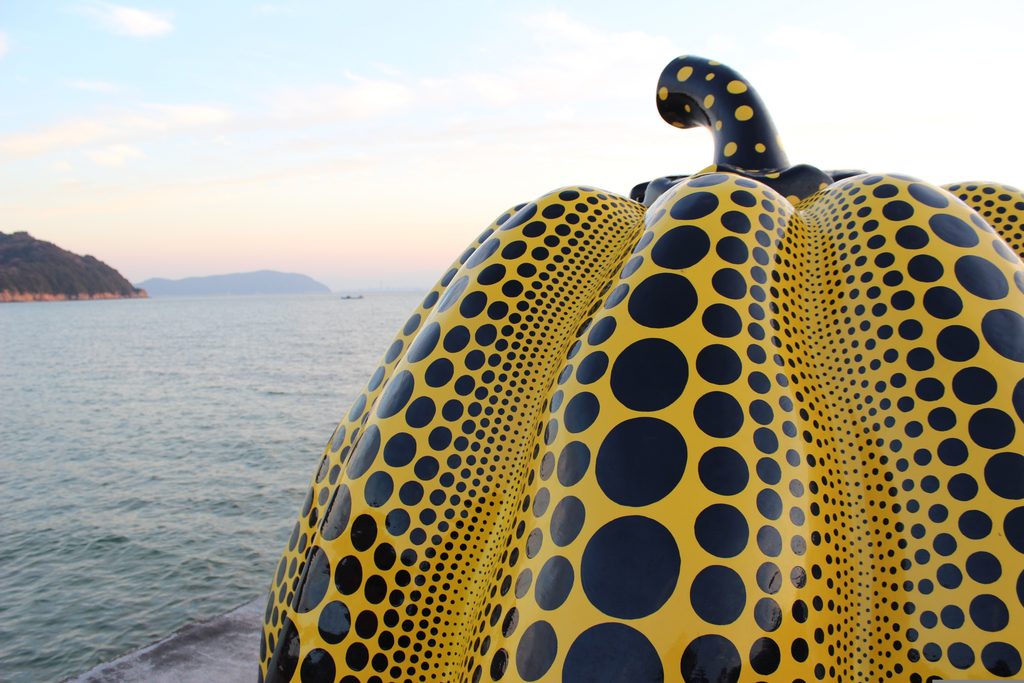
By any standard of modern art history, Yayoi Kusama stands as a monumental force. Universally recognized for her hypnotic polka dots, dense “Infinity Nets”, and mesmerizing mirror installations, she spent nearly eight decades transforming personal psychological trauma into a globally celebrated visual language. As a pioneer who bridged minimalism, pop art, and performance art, Kusama secured her place as one of the most successful and top-selling female artists in history.
Childhood and the Genesis of the Dot
Kusama’s artistic vision was forged in the conservative landscape of Matsumoto, Japan, where she was born on 22 March 1929. Raised by a wealthy but volatile family that ran a wholesale seed nursery, her childhood was marked by intense emotional distress.
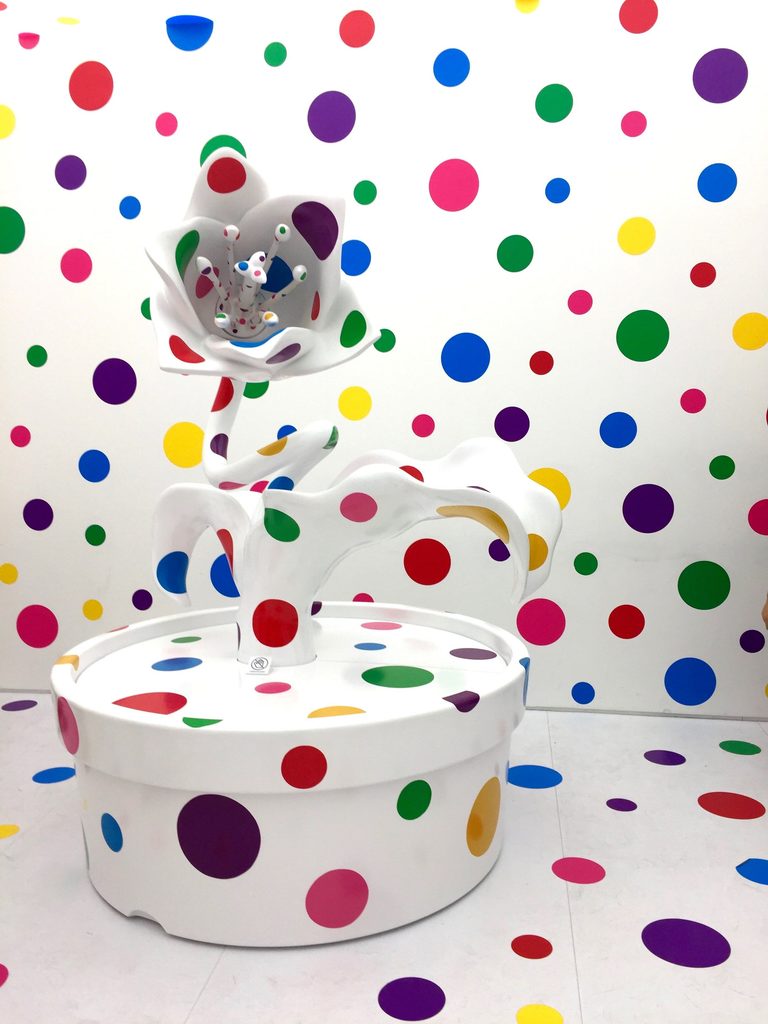
Around the age of ten, Kusama began experiencing vivid, terrifying hallucinations. In these episodes, fields of flowers or the patterns on a tablecloth would multiply, come alive, and threaten to engulf her. She described this terrifying sensation as “self-obliteration”—the feeling of her own identity dissolving into an infinite pattern.
Art became her survival mechanism. She began rapidly sketching these visions on paper to cope with her fear. However, her mother violently opposed her ambitions, frequently confiscating her art supplies and demanding she prepare for a life as a traditional housewife. During World War II, a 15-year-old Kusama was conscripted to work in a blackout factory sewing parachutes, an experience that deepened her sense of isolation. After the war, she briefly studied nihonga—a rigid, traditional style of Japanese painting in Kyoto—but grew deeply frustrated by its strict academic rules. Seeking absolute creative freedom, she set her sights on the West.
Conscripted to sew parachutes in a wartime factory at age 15. After WWII, she briefly studied the rigid, traditional style of nihonga painting in Kyoto, but left out of frustration with its academic restrictions. Looking to escape a conservative Japanese society, she moved to New York City in late 1957 with currency sewn directly into her clothes. Achieved critical breakthroughs with massive, labor-intensive monochrome paintings consisting of thousands of tiny, interlocking loops of paint.
The New York Avant-Garde Era
In 1957, with bundles of drawings sewn into her clothes and a pocketful of dollars, Kusama arrived in New York City. The transition was brutal; she faced extreme poverty, sexism, and xenophobia in a male-dominated art world. Yet, her response was tireless, relentless labor.
Her first major American breakthrough came with her “Infinity Nets”—massive, monochromatic canvases covered in thousands of tiny, interlocking loops of paint. These pieces required days of uninterrupted painting, driving her to physical exhaustion.
Exhausted by New York’s grueling pace, systemic discrimination, and mourning the death of her close companion, the artist Joseph Cornell, Kusama’s health deteriorated significantly. She returned to Japan in 1973, feeling emotionally shattered and dejected.
During this darker transitional phase, she temporarily stepped away from large-scale installations. Instead, she focused heavily on writing dark, visceral poetry and creating surrealist collages that dealt with natural life cycles, grief, and the fragility of the human mind. It was a period of deep introspection and acute psychological struggle.
Return to Japan and Psychological Survival
In 1977, seeking a structured environment to permanently manage her worsening obsessive-compulsive neurosis and lifelong hallucinations, Kusama voluntarily checked into the Seiwa Hospital for the Mentally Ill in Tokyo. It became her home for the rest of her life.
Rather than signaling the end of her career, this move provided the safety and stability she desperately needed to flourish. She established a private art studio down the street from the facility and instituted a strict, punishing daily routine: walking to the studio at dawn to paint, and returning to the hospital at dusk to write.
Over the next several decades, the art world slowly caught up to her genius. In 1993, she became the first solo artist to officially represent Japan at the Venice Biennale, a triumphant moment that cemented her critical rehabilitation. By the 2010s, Kusama had become a global phenomenon. Her “Infinity Mirror Rooms” drew record-breaking, hours-long lines at museums worldwide, perfectly capturing the imagination of the digital age. She expanded her reach into high fashion, launching massive global design collaborations with luxury houses like Louis Vuitton.
A Lasting Legacy
Yayoi Kusama passed away peacefully in Tokyo on 14 August 2026 at the age of 97. Throughout a life defined by intense personal struggle and chronic mental illness, she never viewed her art merely as a profession.
For Kusama, art was a literal lifeline—a mechanism to process psychological pain and share a message of cosmic love and healing with the world. By turning her private hallucinations into an infinite universe, she invited millions of viewers to lose themselves, and find themselves, inside her dots.